Healthcare / Medical Devices
Smart urinometer: Automated ICU urine output monitoring system with real-time analytics
Development of a smart urinometer for ICU and post-surgical patients, with design documentation structured to IEC 62304 and ISO 13485 expectations, that automatically measures urine output, flow rate and colour. It is designed to replace manual hourly readings, with design targets of 40% less nursing time on urine monitoring and earlier detection of acute kidney injury (AKI).
What we did: We designed the bedside device electronics and PCB, the load-cell and optical sensing, IEC 62304 Class B firmware, the AKI risk models, the nurse-station dashboard and EMR integration, and prepared the CE technical file and 510(k) documentation.
Medical device manufacturer, India14 months
Published Last reviewed:
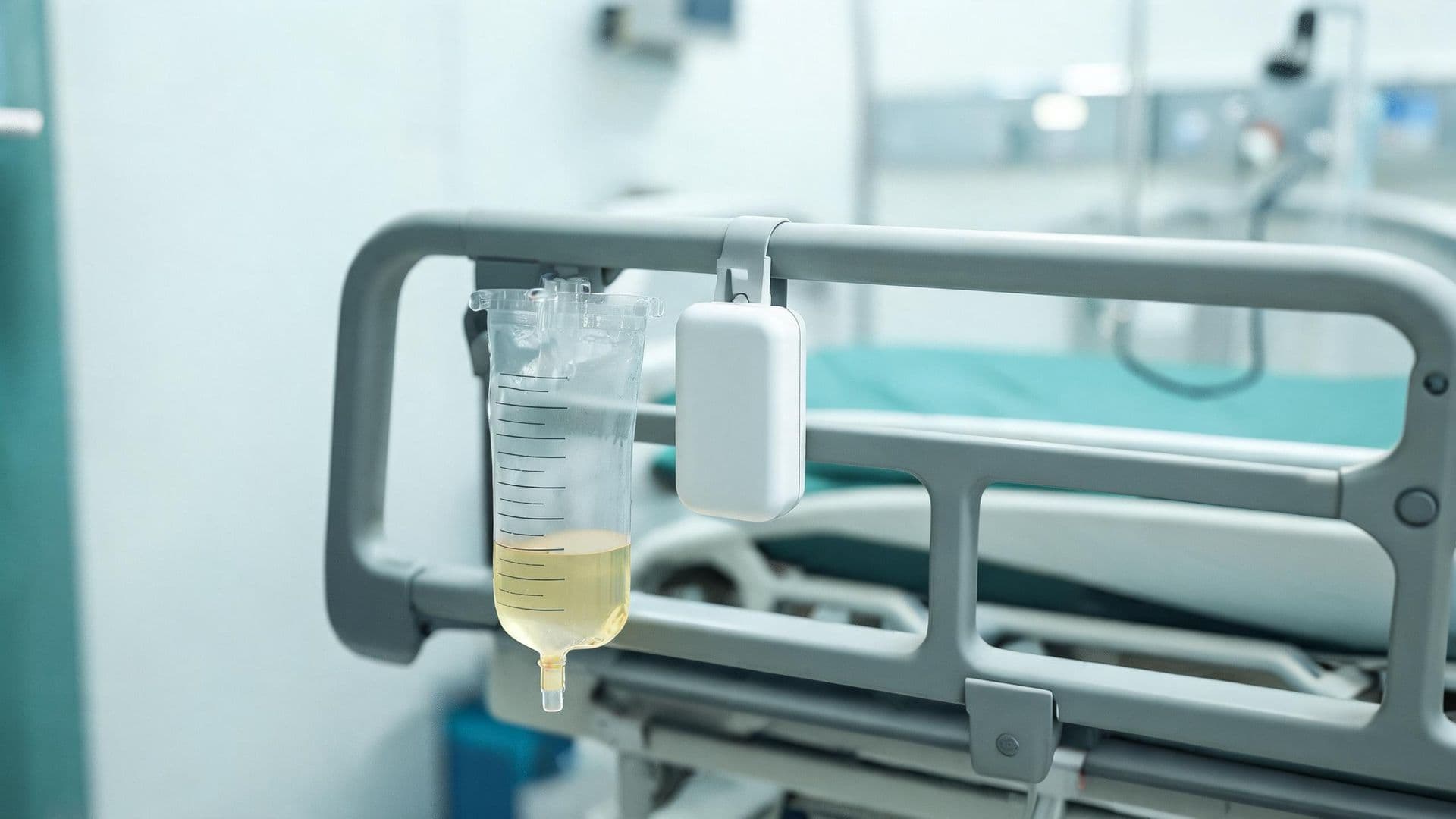 Illustrative image
The challenge
A medical device manufacturer needed to modernize urine output monitoring in ICUs. Traditional urinometers require hourly manual readings, are prone to human error, and delay the detection of acute kidney injury - a condition that affects 50% of ICU patients.
Manual measurement burden
ICU nurses spend significant time on hourly urine measurements. Manual readings are often delayed, missed, or inaccurate, affecting patient care.
Delayed AKI detection
Acute Kidney Injury develops rapidly but manual monitoring catches it 6-12 hours late. Early detection can prevent progression to kidney failure.
Data silos
Handwritten urine logs are not integrated with hospital EMR systems, making trend analysis and clinical decision support impossible.
Infection control
Frequent manual handling of urine collection systems increases infection risk. The solution needed to be a closed system with minimal contact.
Impact figures describe the situation before the project, as the client reported it to us; we did not measure them.
Our solution
We developed an intelligent urine monitoring system that automatically measures volume, flow rate, and urine characteristics, integrates with hospital systems, and uses AI to detect early signs of kidney dysfunction.
System architecture
Comprehensive ICU monitoring solution with bedside device, nurse station display, and cloud-based analytics.
Bedside device
- Precision load cell for volume measurement
- Optical flow sensor for real-time flow rate
- RGB color sensor for urine analysis
- Temperature sensor for sample integrity
- Capacitive touch interface
- WiFi + BLE connectivity
Nurse station
- Multi-patient monitoring dashboard
- Real-time alerts and notifications
- Trend visualization and reporting
- Shift handoff summaries
- Voice alert integration
Clinical platform
- HL7 FHIR EMR integration
- AI-powered AKI prediction
- Clinical decision support
- Regulatory audit logging
- Multi-hospital analytics
Custom hardware design
- MCU
- ESP32-S3 (WiFi + BLE + AI)
- Load Cell
- Strain gauge (0.1ml resolution)
- Flow Sensor
- Optical drop counter
- Color Sensor
- TCS34725 RGB sensor
- Display
- 2.4" TFT LCD with touch
- Power
- USB-C with battery backup
- Protection
- IPX4; designed to IEC 60601-1
Medical-grade firmware architecture
- Real-time volume tracking with 0.1ml resolution
- Flow rate calculation with trend analysis
- Urine color classification (clear to dark amber)
- Temperature monitoring for sample quality
- Automatic hourly reporting to EMR
- AKI staging on KDIGO urine-output criteria
- Alarm management with escalation logic
- IEC 62304 Class B software lifecycle
Implementation timeline
Phase durations are approximate and some phases ran in parallel, so they add up to more than the 14 months programme.
Phase 1: Clinical requirements & design
10 weeks- ICU workflow analysis and nurse interviews
- Clinical requirements with nephrologists
- Risk analysis per ISO 14971
- System architecture and design inputs
Phase 2: Hardware development
14 weeks- Precision sensor selection and testing
- PCB design with medical-grade components
- Enclosure design for bedside mounting
- 3 prototype iterations with clinical feedback
Phase 3: Firmware development
16 weeks- IEC 62304 development process
- Sensor fusion algorithms
- Alarm management system
- EMR integration protocols
- Unit testing (96% code coverage)
Phase 4: AI model development
12 weeks- Training and validation dataset preparation
- AKI prediction model development
- Clinical validation study design
- Edge inference optimization
Phase 5: Verification & validation
10 weeks- IEC 60601-1 pre-compliance testing (formal testing by the client at an accredited lab)
- Clinical accuracy study support
- Usability testing with ICU nurses
- Biocompatibility assessment
Phase 6: Submission package preparation
8 weeks- Technical documentation compilation
- CE technical file preparation
- FDA 510(k) preparation
- Production transfer
Results & impact
The Smart Urinometer was designed to reduce nursing time on urine monitoring and support earlier AKI detection. All figures below are design targets; the device is pre-submission and has no clinical outcome data. CDSCO licensing under the Medical Devices Rules, 2017 (in the risk class CDSCO assigns) is the client's step, as are the CE and FDA filings.
How to read the labels: Design target = an engineering target, not a field measurement; Client-reported baseline = the client's own figure for the situation before the project; we did not measure it. Figures without a label are specifications or project scope.
Volume accuracy
Design target±1% or ±2 mL
Measured volume vs a gravimetric reference
Nursing time saved
Design target40%
On urine monitoring tasks
AKI detection
Design target6hr earlier
Versus hourly manual monitoring
Development timeline
14 months
Requirements to submission-ready package
Technologies used
- ESP32-S3
- Load Cells
- Optical Sensors
- TensorFlow Lite
- WiFi
- BLE 5.0
- HL7 FHIR
- React
- Node.js
- PostgreSQL
- AWS IoT
Related case studies
Healthcare / Medical Devices
Medical wearable: Remote patient monitoring device for cardiac care
Healthcare / Neonatal Care