Healthcare / Medical Devices
Oral screening camera probe: Handheld intraoral camera streaming over BLE 5.2, Wi-Fi and UVC
For an Indian medical-device client we designed a handheld camera probe that helps clinicians examine the mouth for oral cancer, with live video over dual-band Wi-Fi and USB UVC and a BLE 5.2 preview link, on a low-cost BOM. Completed by early 2025.
What we did: We designed the probe's electronics and firmware: a custom camera module with real-time encoding, three image paths (dual-band Wi-Fi and a driverless USB Video Class interface for live video, and BLE 5.2 for low-resolution preview and still images), an image-enhancement pipeline (contrast and colour processing for on-screen viewing), battery power management and a compact, ergonomic handheld form factor, with the BOM optimised for cost.
Medical-device client, India8 monthsTeam of 5
Status: Completed; prototype handed over to the client in early 2025 (case study first published January 2025)
Published Last reviewed:
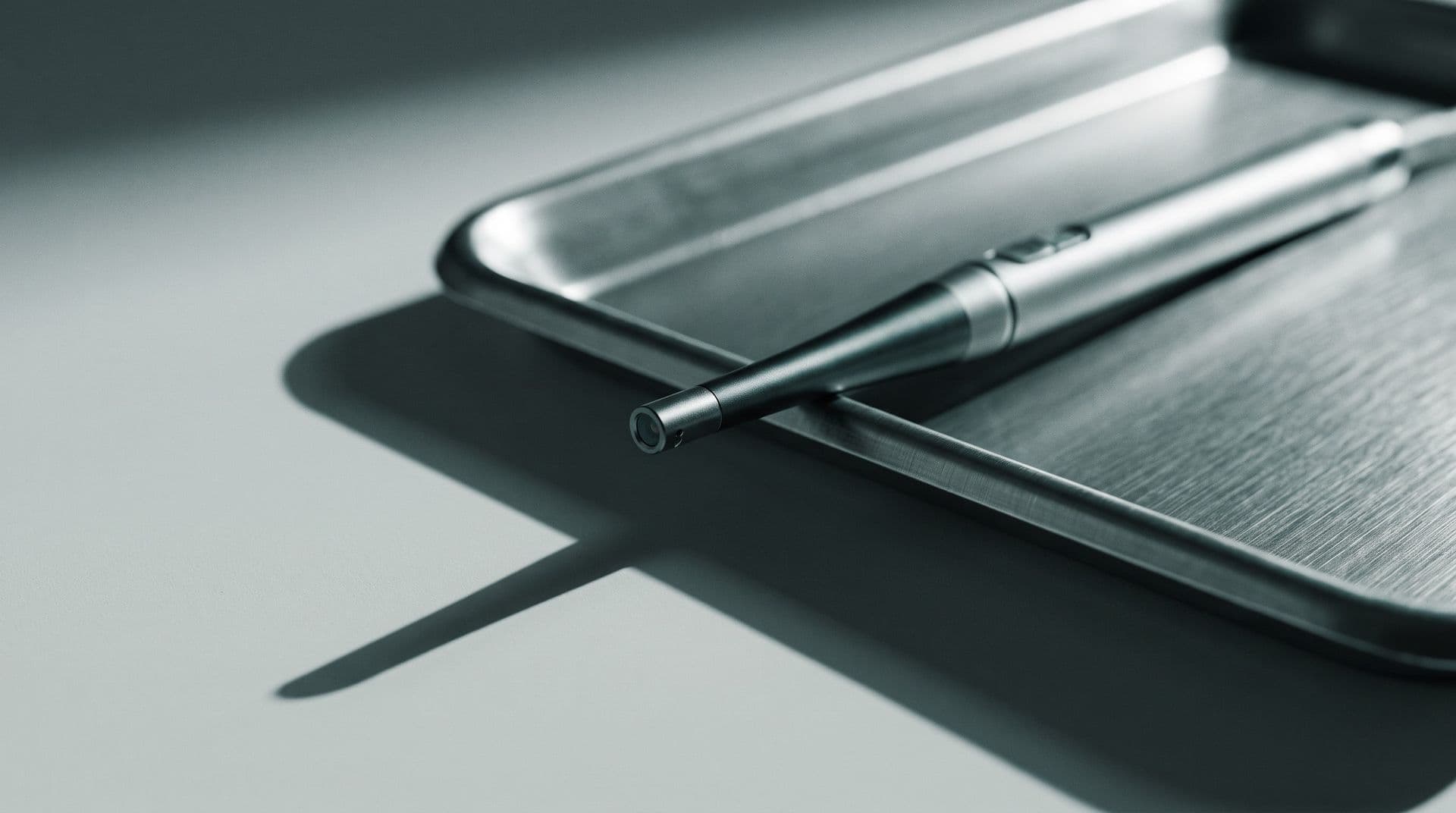 Illustrative image
The challenge
The client needed a handheld camera probe that dentists and oral-cancer specialists can use to look inside the mouth and share the video. It had to stream over several links, keep the bill of materials (BOM) as low as possible for the Indian market, and stay small and comfortable to hold during long examinations.
Three ways to stream video
The probe had to connect over BLE, Wi-Fi and USB Video Class (UVC), so it works with a phone, a remote viewer or a PC without special drivers.
Image quality with low latency
Clinicians need a clear, responsive image to examine tissue; lag or poor image quality makes the tool hard to use.
Lowest possible BOM
The device had to be affordable for Indian clinics, so every part choice was driven by cost.
Comfortable to hold
A compact, lightweight handheld form factor was needed for use during long procedures.
Impact figures describe the situation before the project, as the client reported it to us; we did not measure them.
Our solution
We built the probe around a custom camera module with real-time encoding, then gave it three image paths: dual-band Wi-Fi for full-resolution live video and remote viewing, a UVC-compliant USB interface that works as a standard webcam, and BLE 5.2 for low-resolution preview and still-image transfer (BLE's throughput is too low for full-resolution live video). An image-enhancement pipeline (contrast and colour processing) improves how tissue looks on screen, and battery power management extends use on a single charge.
System architecture
One camera, three output paths, one battery.
Imaging
- Custom-designed camera module
- Real-time video encoding
- Image-enhancement pipeline (contrast and colour processing) for on-screen viewing
Video links
- Dual-band Wi-Fi for full-resolution live video and remote viewing
- BLE 5.2 for low-resolution preview and still-image transfer
- UVC-compliant USB: plug-and-play video, no extra driver
- Video can feed telemedicine software for remote review
Power and mechanics
- Battery-efficient power management
- Compact, lightweight handheld form factor
- BOM optimised for the Indian market
Key design points
- Camera
- Custom module, real-time encoding
- Live-video link
- Dual-band Wi-Fi
- Preview and stills link
- BLE 5.2 (low resolution)
- Wired link
- USB Video Class (UVC)
- Power
- Rechargeable battery, managed power
- Form factor
- Handheld, ergonomic
What we delivered
- Camera module design and real-time encoding
- Dual-band Wi-Fi live-video path
- BLE 5.2 preview and still-image path
- UVC-compliant USB device firmware
- Image-enhancement pipeline (contrast and colour processing)
- Battery and power management
- Cost-optimised BOM
- Compact handheld electronics packaging
Outcome
The probe delivers live video over Wi-Fi and USB UVC and preview images over BLE while keeping the BOM low, and the UVC path lets any standard PC or telemedicine software show the video without a driver. The prototype was handed over to the client in early 2025. The probe is an imaging aid for clinicians; this page makes no claim about diagnostic accuracy, and we do not publish a BLE resolution or frame-rate figure because no measurement is on record.
How to read the labels: Client-reported baseline = the client's own figure for the situation before the project; we did not measure it. Figures without a label are specifications or project scope.
Video links
Wi-Fi + UVC + BLE 5.2
Live video over Wi-Fi and UVC, BLE preview, on a cost-optimised BOM
Driverless video
UVC
Works as a standard USB camera with PCs and telemedicine software
Design duration
8 months
Team of 5
Status at hand-over
Prototype
Handed over to the client, early 2025
Technologies used
- BLE 5.2
- Dual-band Wi-Fi
- USB Video Class (UVC)
- Video encoding
- Camera module design
- Image enhancement
- Battery management
Related case studies
Healthcare / Medical Devices
Smart IV infusion pump: Stepper-driven infusion control with BLE, Wi-Fi and occlusion detection
Healthcare / Neonatal Care