Healthcare / Neonatal Care
Neonatal Vitals Wearable: 20 mm Wireless SpO₂ and Heart-Rate Monitor for NICU Care
For a Hyderabad medical-device client we designed a 20 mm wireless wearable that streams a newborn's SpO₂ and heart rate over BLE, using a MAX86161 optical sensor. Completed by early 2025 and evaluated in a controlled NICU setting (client-reported).
What we did: We designed the 20 mm-diameter wearable's electronics and low-power RTOS firmware: a MAX86161 optical front-end for SpO₂ and heart rate (PPG), Bluetooth Low Energy streaming to a hospital dashboard, and power management for extended use, in a soft, non-adhesive enclosure made of biocompatible materials.
Medical-device client, Hyderabad, India8 monthsTeam of 6
Published Last reviewed:
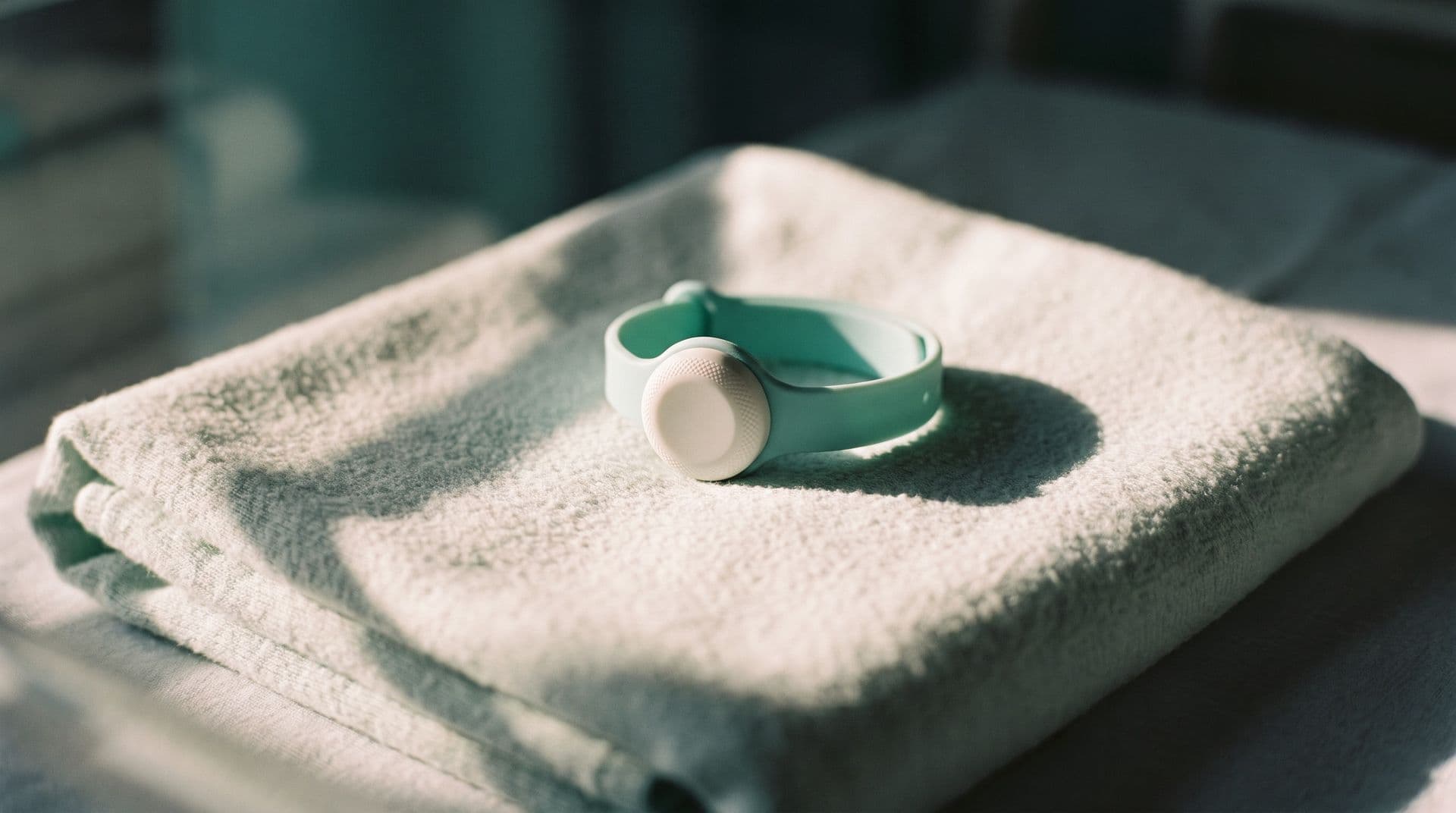 Illustrative image
The Challenge
Newborns in neonatal intensive care units (NICUs) need continuous monitoring of vital signs such as heart rate and blood-oxygen saturation (SpO₂). Wired sensors can cause discomfort and skin irritation, restrict movement and get in the way when parents hold their baby. The client wanted a wireless wearable only 20 mm across that monitors vitals in real time while staying comfortable and safe on fragile newborn skin.
Wires on a newborn
Wired leads restrict movement, can irritate the skin and get in the way of skin-to-skin contact with parents.
Impact: Wireless design needed20 mm diameter
The optical sensor, radio, battery and power electronics all had to fit in a device 20 mm across.
Impact: Ultra-compact electronicsFragile skin
Adhesives and hard materials can damage newborn skin, so attachment and materials had to be gentle.
Impact: Non-adhesive, biocompatibleContinuous data
Clinicians need a continuous, real-time stream at the nursing station, not occasional spot checks.
Impact: Real-time BLE streamingOur Solution
We designed a 20 mm wearable built around the MAX86161 optical sensor, which measures SpO₂ and heart rate by photoplethysmography (PPG): shining light into the skin and measuring how much returns with each heartbeat. A low-power embedded system streams the data over Bluetooth Low Energy to a hospital dashboard, and optimised power management extends each session. The enclosure uses soft, biocompatible materials and a non-adhesive attachment to reduce the risk of skin irritation.
System Architecture
Optical sensing, low-power processing and BLE in a 20 mm package.
Sensing
- MAX86161 optical (PPG) front-end
- SpO₂ and heart-rate measurement
- Continuous vitals monitoring
Embedded system
- Low-power embedded system with RTOS firmware
- Optimised power management for extended use
- Battery-powered, all in a 20 mm package
Connectivity and enclosure
- Bluetooth Low Energy streaming
- Real-time hospital dashboard
- Soft, biocompatible, non-adhesive enclosure
Key Design Points
| Size | 20 mm diameter |
| Optical front-end | MAX86161 |
| Measurements | SpO₂, heart rate (PPG) |
| Wireless | Bluetooth Low Energy |
| Firmware | RTOS, low-power |
| Attachment | Non-adhesive, biocompatible materials |
| Safety framing | Designed with neonatal medical-device safety requirements in mind |
What We Delivered
- 20 mm wearable electronics design
- MAX86161 integration for SpO₂ and heart rate
- Low-power RTOS firmware and power management
- BLE streaming to a hospital dashboard
- Soft, non-adhesive enclosure using biocompatible materials
Outcome
We developed the 20 mm wearable and it streamed continuous SpO₂ and heart-rate data over BLE. The client reports that it was evaluated in a controlled NICU setting. The wireless, non-adhesive design is meant to reduce skin-irritation risk, allow remote monitoring from the nursing station and keep wires out of the way of parent contact; these are design goals, and no clinical-outcome figures are published here.
NICU evaluation
Controlled setting
Evaluated in a controlled NICU environment, as reported by the client (not a performance figure)
Continuous monitoring
SpO₂ + heart rate
Real-time data over BLE to a hospital dashboard
Form factor
20 mm
Diameter of the complete wearable
Design duration
8 months
Team of 6
Technologies Used
Related Case Studies
Healthcare / Neonatal Care
Automated Nitric Oxide Therapy System: Connected iNO Delivery for NICU Patients
Healthcare / Medical Devices