Logistics / Indoor Asset Tracking
BLE beacon RTLS: Indoor asset tracking for warehouses and commercial sites
For a Dubai client we built a BLE beacon RTLS for indoor asset tracking: custom beacons, RSSI-based trilateration and fingerprinting, OTA updates and a dashboard. Completed by early 2025 and tested in industrial sites.
What we did: We designed the BLE beacon hardware and low-power firmware (3+ year coin-cell life as the design target), the RSSI-based trilateration and fingerprinting location engine, over-the-air firmware updates, API integration with the client's warehouse and asset-management software, and a web and mobile dashboard for live tracking and alerts.
Asset-tracking client, Dubai, UAE5 monthsTeam of 4
Status: Completed; tested in industrial environments (case study first published January 2025)
Published Last reviewed:
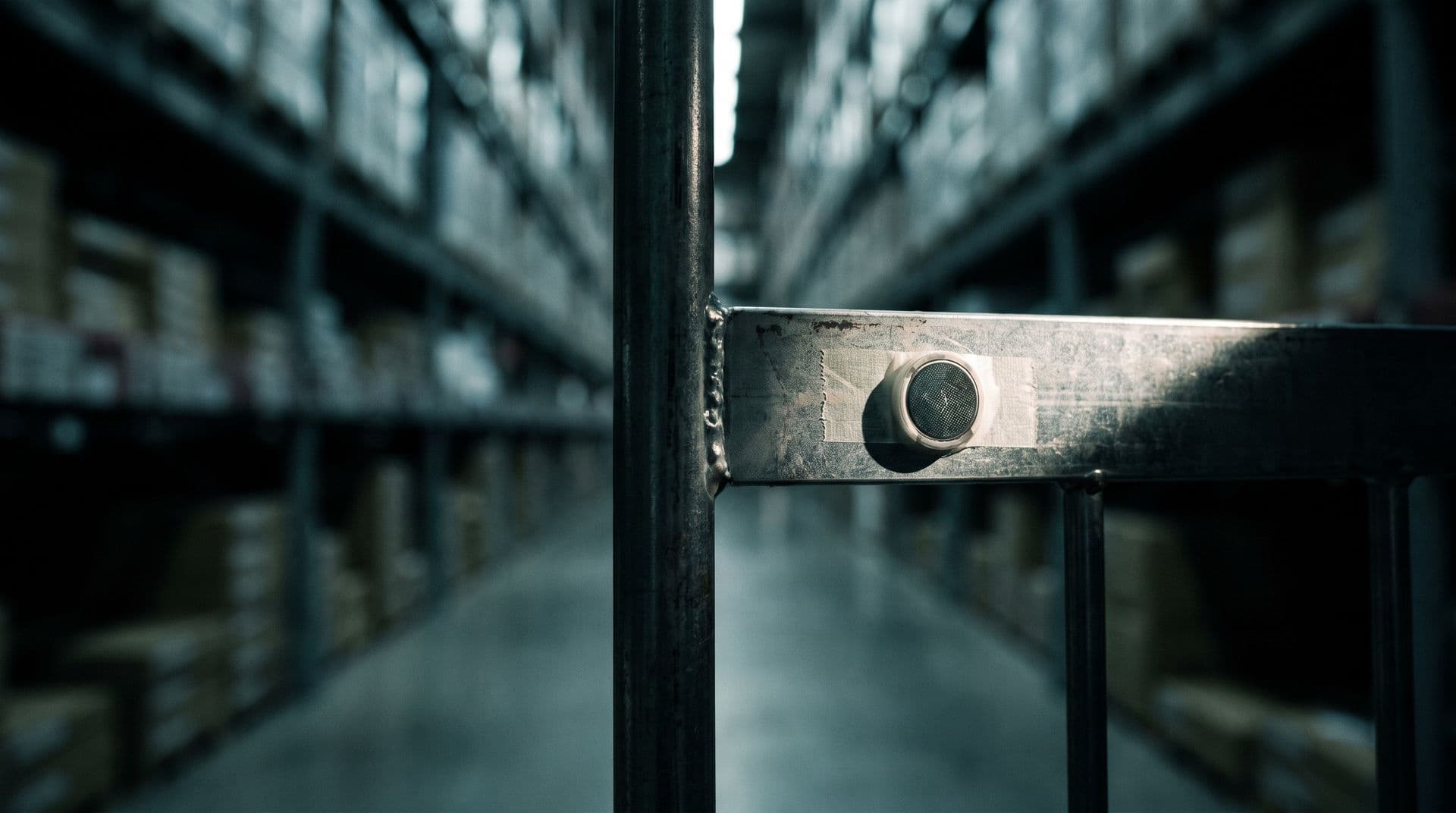 Illustrative image
The challenge
The client needed to find assets quickly inside large warehouses, offices and other commercial buildings, where GPS does not work. The system had to be accurate in dense, RF-noisy spaces, run beacons for years on small batteries, plug into existing warehouse and enterprise software, and stay affordable at large scale.
Indoor positioning in dense spaces
Racks, walls and people block and reflect radio signals, which makes indoor location estimates noisy.
Years on a small battery
Large fleets of beacons cannot be recharged often, so each one had to run for years on a coin cell.
Fit existing software
Location data had to flow into the client's existing warehouse and enterprise asset-management systems.
RF interference
Wi-Fi, other Bluetooth devices and machinery crowd the 2.4 GHz band, so tracking had to stay reliable in RF noise.
Impact figures describe the situation before the project, as the client reported it to us; we did not measure them.
Our solution
We built a Bluetooth Low Energy real-time location system (RTLS). Custom beacons advertise from each asset, their received signal strength (RSSI) is measured, and a location engine combines trilateration (estimating range to several fixed receivers from RSSI) with fingerprinting (matching live readings against a recorded signal map of the site) to estimate position. Firmware keeps the beacons in low-power states, and over-the-air updates let the client manage beacons remotely.
System architecture
Beacons on assets, a location engine, and integration into the client's software.
Beacon hardware and firmware
- Custom BLE beacon hardware with extended range
- Low-power firmware; coin-cell powered
- Over-the-air (OTA) firmware updates
Location engine
- RSSI-based trilateration
- Fingerprinting against a recorded site signal map
Software integration
- API integration with warehouse and asset-management software
- Web and mobile dashboard
- Real-time tracking and alerts
Key design points
- Radio
- Bluetooth Low Energy
- Positioning method
- RSSI trilateration + fingerprinting
- Power
- Coin cell; 3+ years (design target, depends on advertising interval and TX power)
- Updates
- Over-the-air firmware
- Integration
- API to WMS / asset software
What we delivered
- Custom BLE beacon hardware
- Low-power beacon firmware
- RSSI trilateration and fingerprinting algorithms
- OTA firmware update path for remote beacon management
- API integration with enterprise asset software
- Web and mobile dashboard with alerts
Outcome
The system was tested in several industrial environments and integrated with the client's enterprise software. The 3+ year beacon battery life is a design target: it holds only with a long advertising interval and moderate transmit power, so raising TX power for range or advertising faster shortens it. We do not publish a positioning-accuracy figure or an operational-saving figure because no measurement of either is on record.
How to read the labels: Design target = an engineering target, not a field measurement; Client-reported baseline = the client's own figure for the situation before the project; we did not measure it. Figures without a label are specifications or project scope.
Beacon battery life
Design target3+ years
On a coin cell; depends on advertising interval and TX power
Software integration
API
Connected to existing warehouse and enterprise asset software
Design duration
5 months
Team of 4
Technologies used
- Bluetooth Low Energy
- BLE beacons
- RSSI trilateration
- RF fingerprinting
- OTA firmware updates
- RTLS
- API integration
- Web dashboard
- Mobile app
Related case studies
Logistics / Warehousing / Asset Tracking
UWB asset tracker: Ultra-wideband RTLS with TDoA and two-way ranging for warehouses
Consumer Electronics / Pet Tech