AI & Machine Learning in Hardware
Advancements in Edge Computing for IoT: Enhancing Performance & Real-Time Data Processing

- IoT Devices
- Machine Learning in Hardware
- Edge AI
- +2 more
Contents· 7 sections
Introduction: How Edge Computing is Transforming IoT Performance
The Internet of Things (IoT) is rapidly evolving, connecting billions of devices worldwide. However, traditional cloud computing often struggles to process massive data streams in real-time, leading to latency issues and network congestion.
Enter Edge Computing—a game-changing technology that brings computation closer to the data source. Instead of relying solely on centralized cloud servers, edge computing processes data locally, reducing latency, bandwidth consumption, and security risks.
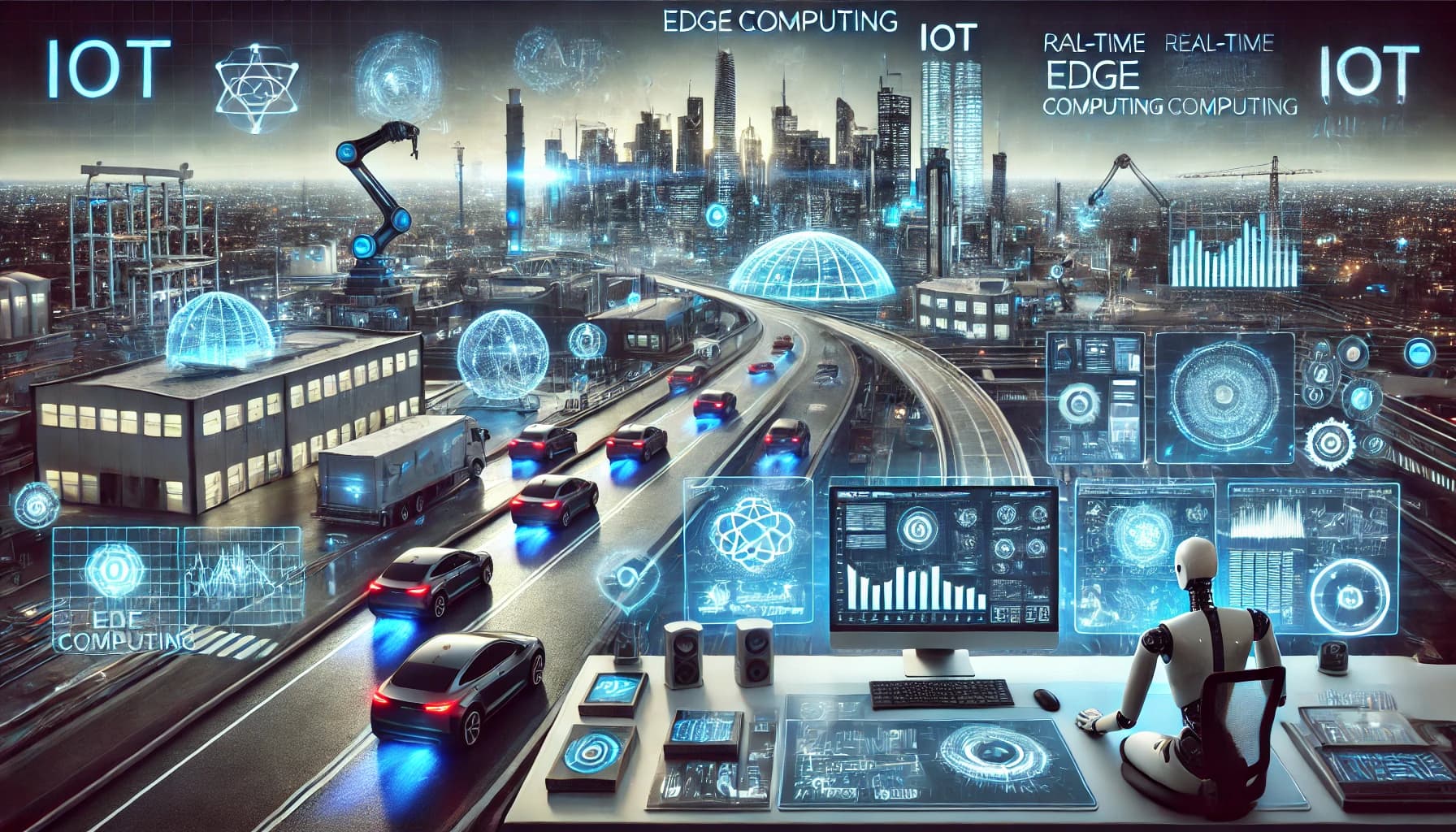
With the rise of autonomous vehicles, industrial automation, and smart city infrastructures, real-time data processing has become a necessity. This blog explores:
- What is Edge Computing?
- Why Edge Computing is Critical for IoT Performance Optimization
- Key Industries Benefiting from Edge Computing
- Future Trends in Edge-Enabled IoT Systems
If you’re looking to enhance IoT system efficiency, minimize latency, and optimize performance, this guide is for you.
1. What is Edge Computing?
A Shift from Cloud to Local Processing
Edge computing is a distributed computing paradigm that processes data closer to IoT devices, rather than transmitting everything to centralized cloud servers. This local real-time data processing dramatically reduces:
✔ Latency delays caused by cloud dependencies
✔ Bandwidth costs from excessive data transmission
✔ Security vulnerabilities associated with centralized networks
In simple terms, edge computing allows IoT devices to make decisions faster, without waiting for cloud responses.
Example:
- Smart Surveillance Systems: Instead of sending terabytes of security footage to the cloud, AI-enabled cameras analyze data on-site, identifying threats instantly.
2. Why Edge Computing is Critical for IoT Performance Optimization
As IoT adoption grows, devices need faster response times and uninterrupted connectivity. Edge computing addresses these challenges by enabling:
✅ Real-Time Data Processing: Immediate insights without network delays
✅ Reduced Latency: Faster decision-making for mission-critical applications
✅ Lower Bandwidth Usage: Data is processed locally, reducing cloud dependency
✅ Enhanced Security & Privacy: Sensitive data stays at the edge, minimizing cyber risks
Example:
- Self-Driving Cars: Edge computing enables autonomous vehicles to react instantly to obstacles, avoiding accidents without relying on cloud processing.
3. Key Industries Benefiting from Edge Computing
A. Industrial Automation & Smart Manufacturing
In Industry 4.0, factories use IoT-powered robots and AI-driven analytics to optimize manufacturing efficiency. Edge computing enables:
✔ Predictive Maintenance: Identifying machine failures before they happen
✔ Automated Quality Control: AI inspects product defects in real-time
✔ Operational Efficiency: Reduces production downtime and energy consumption
Example:
- Tesla’s Gigafactories leverage edge computing-powered robotics to automate assembly lines, increasing productivity and reducing errors.
B. Autonomous Vehicles & Transportation
Self-driving cars generate up to 4TB of data daily. Edge computing processes critical data on the vehicle itself, allowing:
✔ Faster Object Detection: AI models recognize pedestrians & obstacles instantly
✔ Real-Time Traffic Optimization: Vehicles adjust routes without cloud dependency
✔ Enhanced Safety: Reduces the risk of delayed response times
Example:
- Tesla’s Autopilot & Waymo’s Self-Driving Cars use edge AI to process sensor & camera feeds locally, ensuring instant decision-making.
C. Smart Cities & Infrastructure
Modern cities rely on IoT sensors, AI-powered traffic management, and smart grids to enhance urban living. Edge computing enables:
✔ Intelligent Traffic Lights: Adaptive signals respond to congestion in real-time
✔ Smart Energy Management: IoT-based grids optimize electricity distribution
✔ Public Safety Monitoring: AI-driven security cameras detect anomalies
Example:
- Barcelona’s Smart City Project deploys edge-based traffic sensors, improving vehicle flow and reducing carbon emissions.
D. Healthcare & Remote Patient Monitoring
The rise of telemedicine and AI-powered diagnostics requires real-time patient monitoring. Edge computing enhances:
✔ Faster Disease Detection: AI processes medical images locally for instant diagnosis
✔ Wearable Health Devices: Tracks heart rate, glucose levels, and oxygen levels
✔ Emergency Response Optimization: Alerts doctors before conditions worsen
Example:
- AI-powered ECG Monitors use edge computing to detect irregular heartbeats in real-time, reducing cardiac arrest risks.
4. Future Trends in Edge-Enabled IoT Systems
As 5G networks, AI advancements, and edge hardware evolve, the future of edge computing will see:
🔹 Edge AI Processing: AI models running directly on IoT devices for instant decision-making
🔹 5G-Powered Edge Networks: Faster data transmission with ultra-low latency
🔹 Autonomous IoT Systems: Self-managed IoT networks with zero cloud dependency
🔹 Blockchain Security in Edge Computing: Decentralized security measures for data protection
Example:
- AWS IoT Greengrass/Wavelength and Azure IoT Edge provide edge-AI deployment platforms to optimize IoT performance across industries.
Conclusion: Why Edge Computing is the Future of IoT Optimization
The explosion of IoT devices demands fast, secure, and reliable computing solutions. Edge computing bridges the gap by enabling:
✔ Real-time data processing with ultra-low latency
✔ Optimized IoT performance for mission-critical applications
✔ Reduced network congestion and cloud reliance
✔ Scalable, intelligent automation for future innovations
As industries shift towards AI-driven automation, smart cities, and self-driving technology, edge computing will play a pivotal role in driving the next wave of IoT advancements.
Want to Implement Edge Computing for Your IoT Devices?
At Rapid Circuitry, we specialize in edge computing solutions that enable businesses to:
✔ Reduce latency for real-time decision-making
✔ Enhance IoT security & optimize network performance
✔ Deploy AI-driven analytics for smarter automation
🚀 Contact Us Today for a free consultation and discover how edge computing can transform your IoT strategy!
Still researching? Read our free How to Choose a Microcontroller (MCU).
Related engineering services
Get new articles by email
New guides and engineering articles on PCB design, firmware and IoT, in your inbox.