Smart Buildings / Real Estate / PropTech
Digital twin: Sensor units and edge gateways for a smart-building platform
Rapid Circuitry designed custom ESP32-S3 multi-sensor units, NVIDIA Jetson floor gateways with BACnet/Modbus translation, and the data pipeline feeding a digital-twin platform for a 50-story mixed-use tower. The building owner's energy and maintenance results are not published here.
What we did: We designed the multi-sensor units and edge gateways, integrated them with the building's legacy systems over BACnet and Modbus, and built the data pipeline and dashboards on Azure Digital Twins.
Commercial real estate developer14 months
Published Last reviewed:
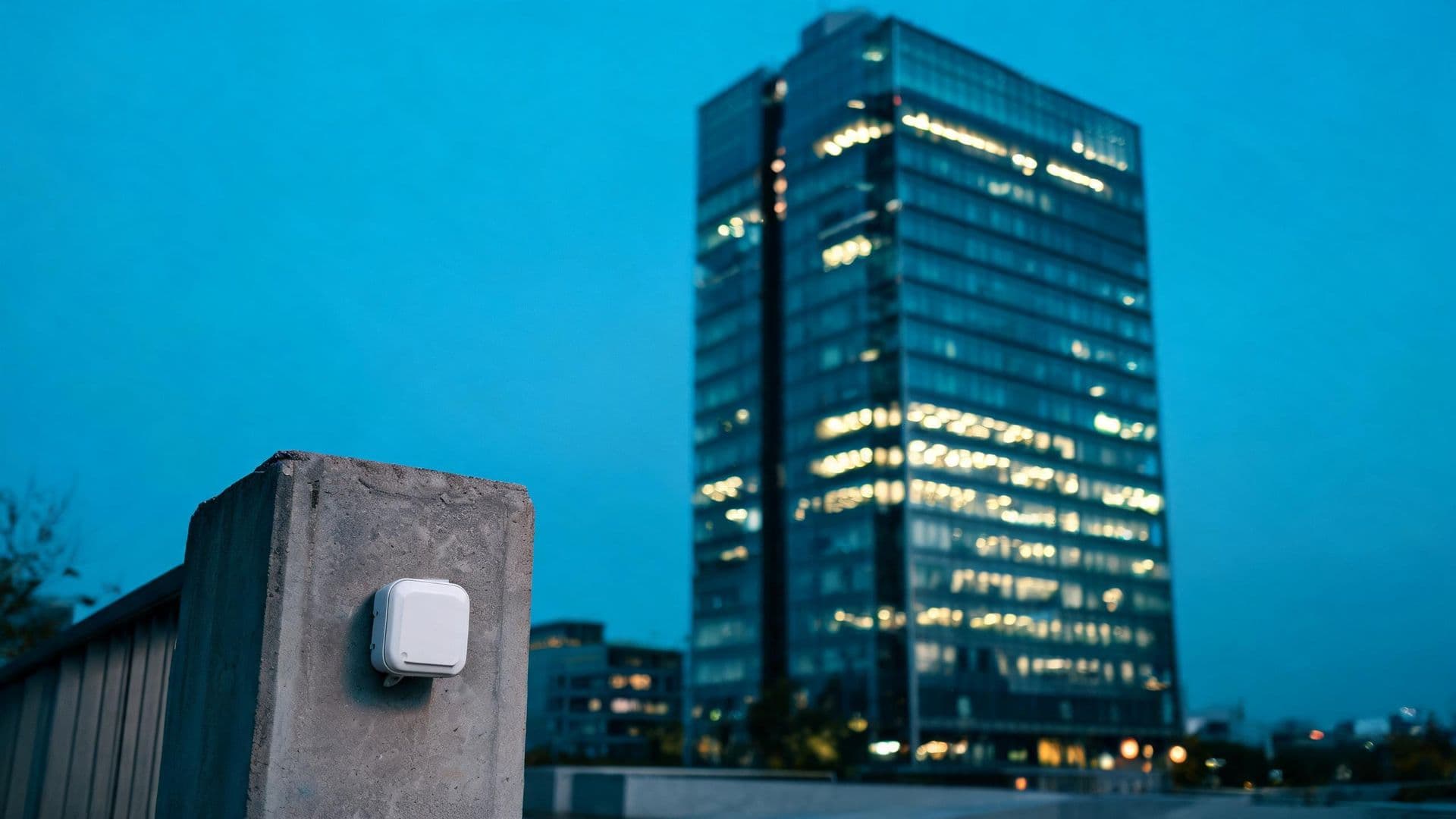 Illustrative image
The challenge
A commercial real estate developer managing a 50-story mixed-use tower with offices, retail, and parking facilities needed to modernize their building management systems to reduce operational costs, improve tenant satisfaction, and achieve sustainability certifications.
Energy inefficiency
The building's legacy HVAC, lighting, and elevator systems operated in silos with no intelligent coordination. Peak demand charges and inefficient scheduling resulted in excessive energy waste.
Reactive maintenance
Building systems failed unexpectedly, causing tenant complaints and emergency repairs. The maintenance team had no visibility into equipment health or degradation patterns.
Siloed systems
Over 12 different vendor systems (HVAC, lighting, access control, fire safety, elevators) operated independently with no unified view or coordinated control.
Tenant experience
Temperature complaints, slow elevators, and inconsistent lighting frustrated tenants. The building struggled to retain premium tenants in a competitive market.
Impact figures describe the situation before the project, as the client reported it to us; we did not measure them.
Our solution
We designed the sensing and edge layer of a digital-twin platform — custom sensor units, floor-level gateways and protocol translation — and the data pipeline that keeps the virtual model of the building in sync with its systems.
System architecture
Multi-layer architecture integrating physical IoT sensors with a cloud-based digital twin engine and AI-driven control. The digital twin engine and AI optimisation layers are the client's platform; we built the physical and edge layers and the data pipeline into it.
Physical layer
- Custom multi-sensor units across building systems
- BLE beacons for occupancy and asset tracking
- Smart meters for granular energy monitoring
- Environmental sensors (CO2, PM2.5, humidity, temperature)
- Vibration sensors on critical HVAC equipment
Edge computing layer
- Floor-level edge gateways (NVIDIA Jetson)
- Real-time data aggregation and preprocessing
- Local AI inference for time-critical decisions
- BACnet/Modbus protocol translation
- Ethernet uplink with 5G backup
Digital twin engine (client platform, not our scope)
- 3D BIM model integration (Autodesk Platform Services, formerly Forge)
- Real-time physics simulation (thermal, airflow)
- What-if scenario modeling
- Historical pattern analysis
- Multi-system correlation engine
AI optimization layer (client platform, not our scope)
- Reinforcement learning for HVAC optimization
- Predictive maintenance ML models
- Demand forecasting algorithms
- Anomaly detection neural networks
- Natural language interface for facility managers
Custom hardware design
- Edge Gateway
- NVIDIA Jetson Orin module, one per floor
- Sensor Nodes
- Custom ESP32-S3 based multi-sensor units
- Protocol Support
- BACnet, Modbus, KNX, MQTT, OPC-UA
- Network
- ESP32-S3 units on Wi-Fi/BLE to floor gateways; gateways on Ethernet with 5G backup
- Redundancy
- Dual-path connectivity, UPS backup
- Cybersecurity
- Hardware security modules, zero-trust architecture
Edge intelligence features
- Sub-100ms local decision making for critical systems
- Federated learning for privacy-preserving model updates
- Automatic protocol discovery and device onboarding
- Secure boot and encrypted firmware updates
- Local buffering for 7 days of offline operation
AI-powered digital twin intelligence
These models belong to the client's digital-twin platform (not our scope) and run on our gateways and in the cloud. The figures below are the platform's design targets.
Thermal comfort optimization
Deep Reinforcement Learning (DQN)
94% occupant comfort prediction
Design targetContinuous optimization, 5-min control intervals
Predictive maintenance
LSTM + Attention mechanism
91% failure prediction accuracy
Design targetOccupancy prediction
Transformer-based time series model
96% accuracy for next-day prediction
Design targetEnergy demand forecasting
Gradient Boosting + Weather integration
±3% day-ahead demand prediction
Design targetAnomaly detection
Variational Autoencoder (VAE)
97% anomaly detection rate
Design targetImplementation timeline
Phase durations are approximate and cover the main engineering work only, so they add up to less than the 14 months programme.
Phase 1: Discovery & BIM integration
8 weeks- Building systems audit and documentation
- Mapping sensor points to the client's BIM model
- Network infrastructure assessment
- Stakeholder workshops and requirements gathering
Phase 2: IoT infrastructure deployment
12 weeks- Sensor network design and installation
- Edge gateway deployment floor by floor
- Protocol integration with legacy systems
- Network security implementation
Phase 3: Data pipeline & dashboards
16 weeks- Data pipeline into Azure Digital Twins
- Edge model deployment on the floor gateways
- Dashboard and visualization development
Phase 4: Optimization & handover
10 weeks- AI model fine-tuning with live data
- Support for the client's control-system commissioning
- Staff training and change management
- Performance baseline establishment
Results & impact
The building owner tracks energy, maintenance and occupant outcomes on its own platform; those results are not published in this case study. Our deliverables were the sensor units, edge gateways, protocol integration and data pipeline described above.
How to read the labels: Design target = an engineering target, not a field measurement; Client-reported baseline = the client's own figure for the situation before the project; we did not measure it. Figures without a label are specifications or project scope.
Technologies used
- NVIDIA Jetson
- ESP32-S3
- Azure Digital Twins
- TensorFlow
- PyTorch
- BACnet
- Modbus
- 5G NR
- Grafana
- TimescaleDB
- React
- Three.js
- Kubernetes
Related case studies
Manufacturing / Heavy Industry
Industrial IoT: Predictive maintenance sensors and edge AI for a steel plant
Infrastructure / Civil Engineering / Smart Cities